Canyoning vs Canyoneering: What Is the Difference?
So What Is the Actual Difference Between Canyoning and Canyoneering?
TL;DR
- Canyoning and canyoneering are the same activity. The word you use depends on where you're from.
- "Canyoning" is standard in Europe, the UK, and most of the world. "Canyoneering" is the US and Canadian term.
- Both involve descending canyons using a mix of rappelling, jumping, swimming, and scrambling.
- There is one small technical nuance: some purists use "canyoning" for wet canyons and "canyoneering" for dry ones - but in everyday use, the terms are interchangeable.
- If you're booking a tour in Europe or Bosnia, you'll almost always see it called canyoning.
Have you searched for adventure activities and noticed the same sport listed under two different names? You're not alone. "Canyoning" and "canyoneering" show up in search results, travel blogs, and tour listings, sometimes side by side, as if they're different things. They aren't. The difference between canyoning and canyoneering is almost entirely a question of geography, not activity.
Here's what you actually need to know before you book a tour or start planning a trip.
What Is Canyoning (and Canyoneering)?
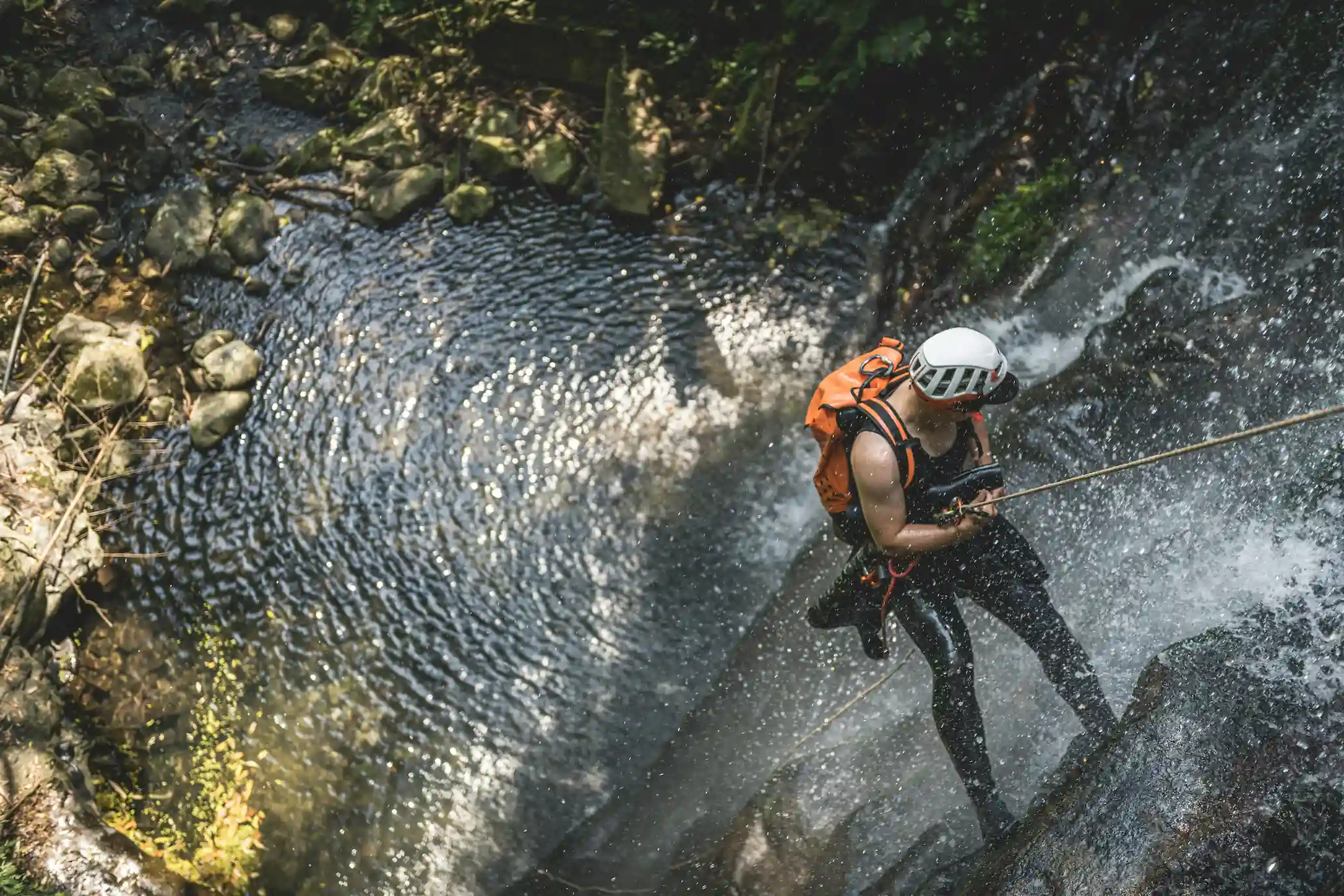
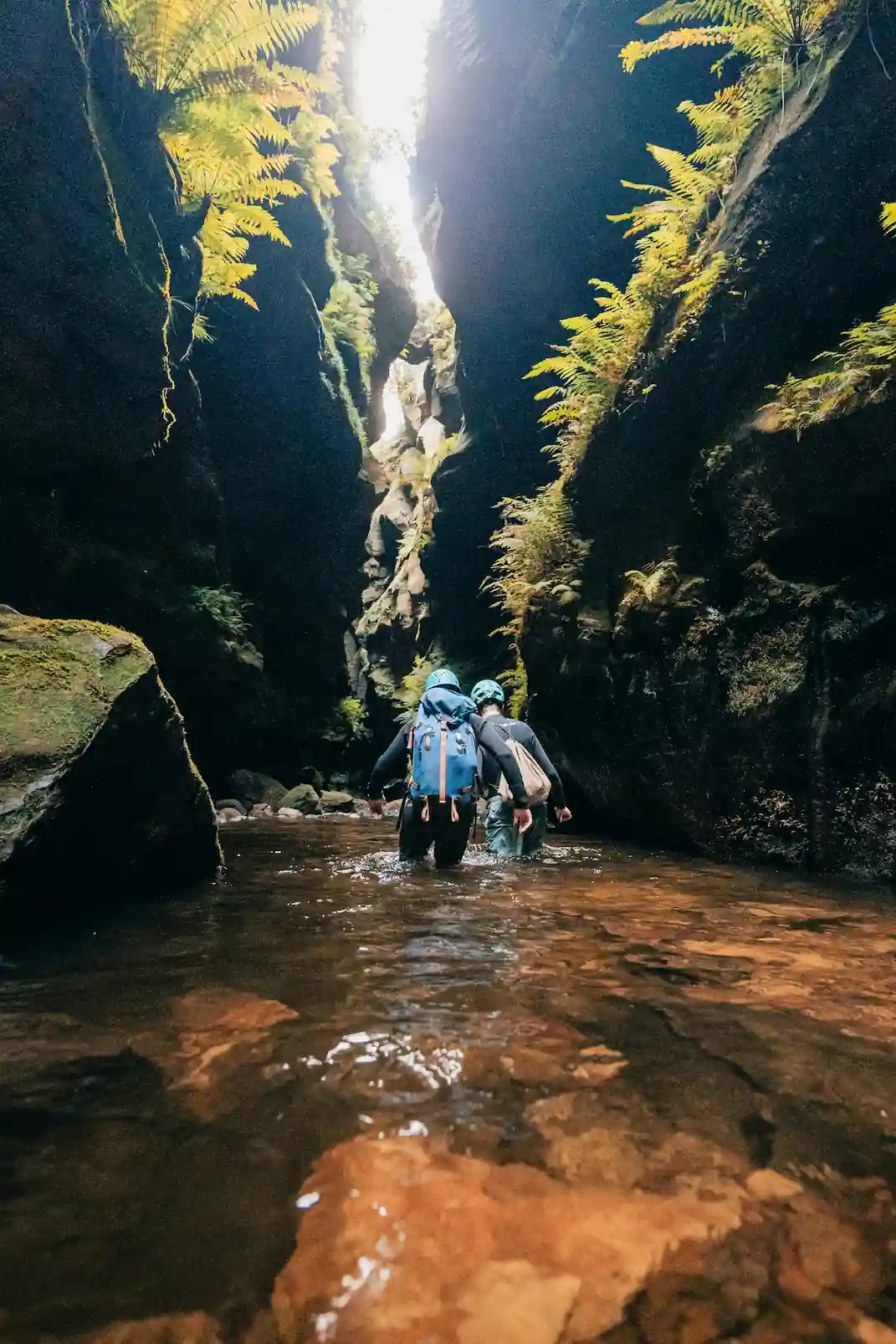
Canyoning is the sport of travelling through a canyon using a combination of techniques: rappelling down waterfalls, jumping into natural pools, sliding over rocks, swimming through gorges, and scrambling along canyon walls. It sits somewhere between hiking, climbing, and swimming, and it doesn't require expertise in any of them.
As Wikipedia defines it, canyoning involves travelling through canyons using techniques such as walking, scrambling, climbing, jumping, abseiling, swimming, and rafting. The sport takes place in wild, water-carved terrain that you simply can't access any other way.
The global canyoning market was valued at $450 million in 2024 and is projected to reach $850 million by 2032. Beginner-level tours lead that growth, which tells you something useful: most people doing this have never done it before.
What Techniques Are Involved, Regardless of the Name?
The two words describe the same sport. As Scoutorama explains, canyoning and canyoneering are the same thing, "canyoneering" is simply the word used in the US, while "canyoning" is used across most of Europe and the rest of the world.
The V7 Basecamp guide puts it plainly: both terms refer to the same activity and the difference is purely cultural. "Canyoning" is the most common term globally, and "canyoneering" is most popular in the United States.
Other regions have their own names for the same sport entirely. Scoutorama notes that it goes by "River Tracing" in parts of Asia, "Kloofing" in South Africa, and "Barranquismo" in Spanish-speaking countries. Same descents, same gear, different words.
Is There Any Technical Difference?
This is where it gets slightly more nuanced, though only among experienced practitioners.
Canyon Log describes a distinction some technical canyoners make: "canyoning" for descending canyons with flowing water, and "canyoneering" for dry canyons without it. Dry canyons bring their own challenges, including anchor building and navigating potholes, while wet canyons involve reading water flow and managing currents.
V7 Basecamp acknowledges this distinction exists within the community but notes that in everyday use, the terms are still used interchangeably. The presence or absence of water changes the techniques required, not the name of the sport.
For practical purposes, if you're booking a guided tour, this distinction doesn't matter. Your guide knows the canyon. Your job is to show up.
Why Does Europe Call It Canyoning?
Because that's where the sport started.
Tateam's history of canyoning traces the sport's origins to France in 1905, when French explorer Edouard Alfred Martel carried out the first documented scientific descent of a canyon, the Gorges du Verdon, still one of the most famous canyoning routes in Europe today.
The sport developed across France, Spain, and Italy over the following decades, long before it reached North America. When it did reach the US, American outdoor culture gave it a new name: canyoneering. By then, Europe had decades of tradition behind the word "canyoning."
Today, France alone has more than 2,000 mapped canyons, and Italy has over 1,000. The sport is especially popular across Switzerland, Austria, and the Balkans, where gorges carved by glacial rivers give you terrain that's hard to find anywhere else.
Bosnia and Herzegovina sits right in the middle of that tradition. Sutjeska National Park contains some of the least-visited and most intact canyon terrain in Europe, with the added context of Perućica, one of the last remaining primary rainforests on the continent.
Whether you call it canyoning or canyoneering, the core techniques are the same.
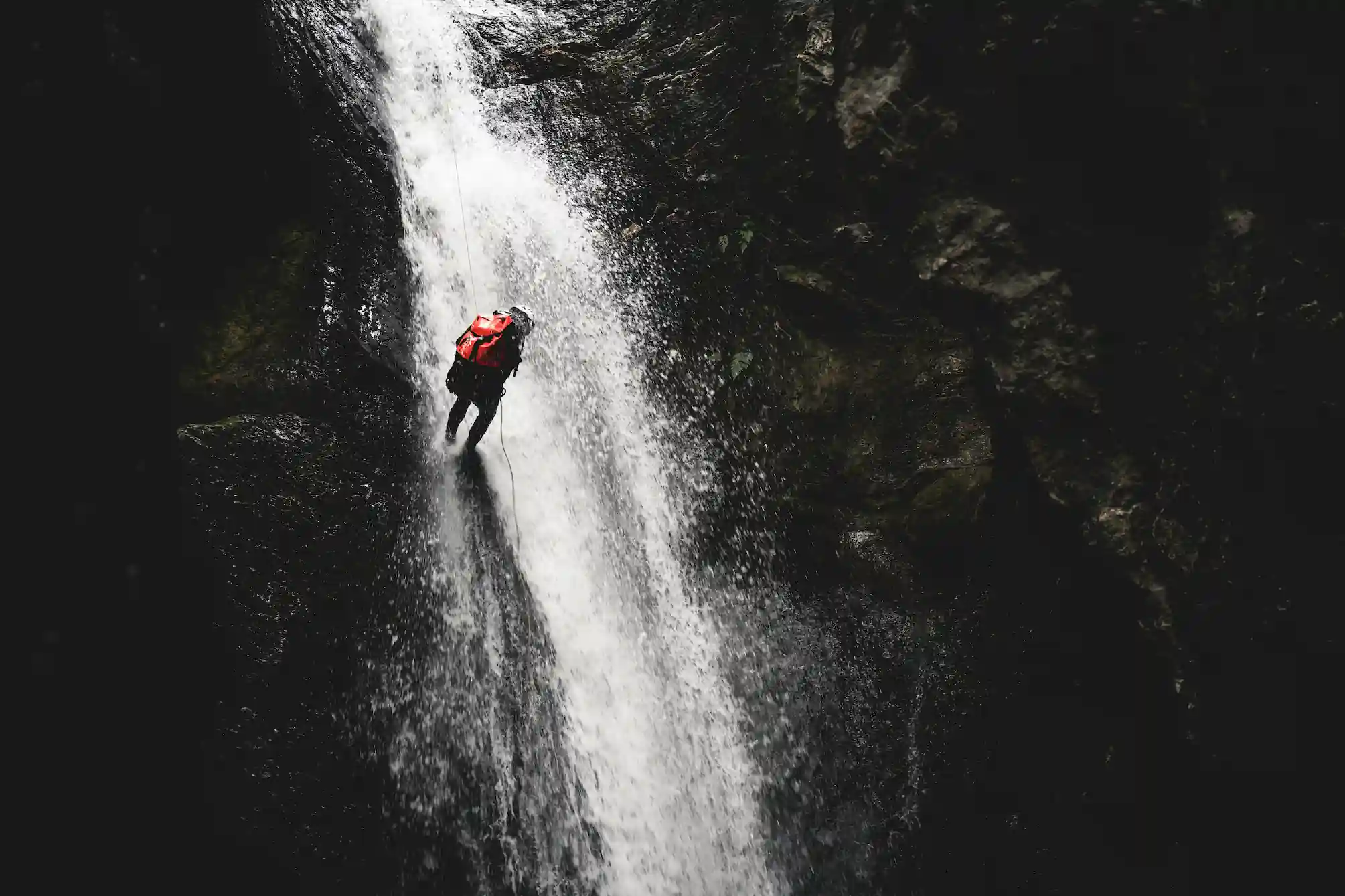
- Rappelling (abseiling): Using a rope and harness to descend waterfalls or rock faces in a controlled way. This is usually the first technical skill beginners learn.
- Jumping: Leaping from ledges or rocks into natural pools below. Heights vary widely by canyon and difficulty level.
- Swimming: Moving through pools, channels, and sections of flowing water. You don't need to be a strong swimmer for beginner tours.
- Scrambling: Moving over uneven rock using hands and feet, without ropes.
- Sliding: Natural rock slides formed by water erosion over thousands of years. Usually the most relaxed part of the descent.
ISPO's beginner guide notes that on guided tours, you're never forced to do anything you're not comfortable with. A good guide moves at the pace of the group, not the canyon clock.
What Equipment Do You Need?
Yes. This is probably the most common misconception people have before their first tour.
The Canyoning Company describes European canyoning as often more water-focused and accessible than its American counterpart, with an emphasis on natural jumps, slides, and water features over the highly technical anchor-and-rope work common in dry Utah-style canyons.
CheckYeti suggests participants be at least 10 years old and in reasonable physical shape. You don't need experience. You don't need to be a strong swimmer. You do need to be comfortable with the idea of getting wet and moving through uneven terrain.
Hrčavka Canyon, where we run our most popular canyoning tour, is genuinely one of the most accessible canyoning routes in Bosnia. Families with children from age 8, guests with no outdoor background, guests who were nervous about heights , they've all done it, and most of them want to go again.
The one thing worth knowing: once you enter a canyon, you follow it through to the end. There's no shortcut out halfway. That's part of what makes it an adventure.
For a guided tour, the answer is: almost nothing you don't already own.
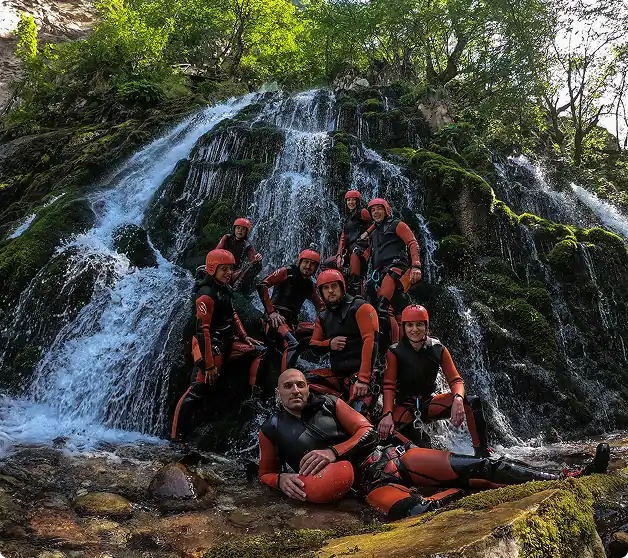
A reputable operator provides everything technical. At Outdoor Tara, our canyoning tours include helmet, wetsuit, neoprene gloves, a certified life jacket, harness, and professional canyoning boots. The boots are worth mentioning specifically: they're purpose-built for wet rock, and no other operator in the area provides them.
For context, aventuragirona.com's beginner guide confirms the standard kit: a wetsuit to manage cold water and protect against rock abrasion, a helmet for falling debris, and a harness for controlled rope descents.
What you bring yourself: a swimsuit, a towel, a change of clothes, and cash for payment. That's it.
Where Can You Go Canyoning (or Canyoneering)?
Everywhere, practically. But some places are better than others.
CheckYeti's Europe guide highlights the Verdon Gorge in France, Interlaken in Switzerland, Tirol in Austria, and Lake Garda in Italy as established hubs. These are all well-mapped, heavily guided, and popular.
If you want something less crowded and equally as striking, the Balkans are worth your attention. Sutjeska National Park in Bosnia sits two hours from Sarajevo, Mostar, and Dubrovnik. The canyon access here is inside a national park that most international visitors have never heard of, which means the groups are smaller and the trails quieter.
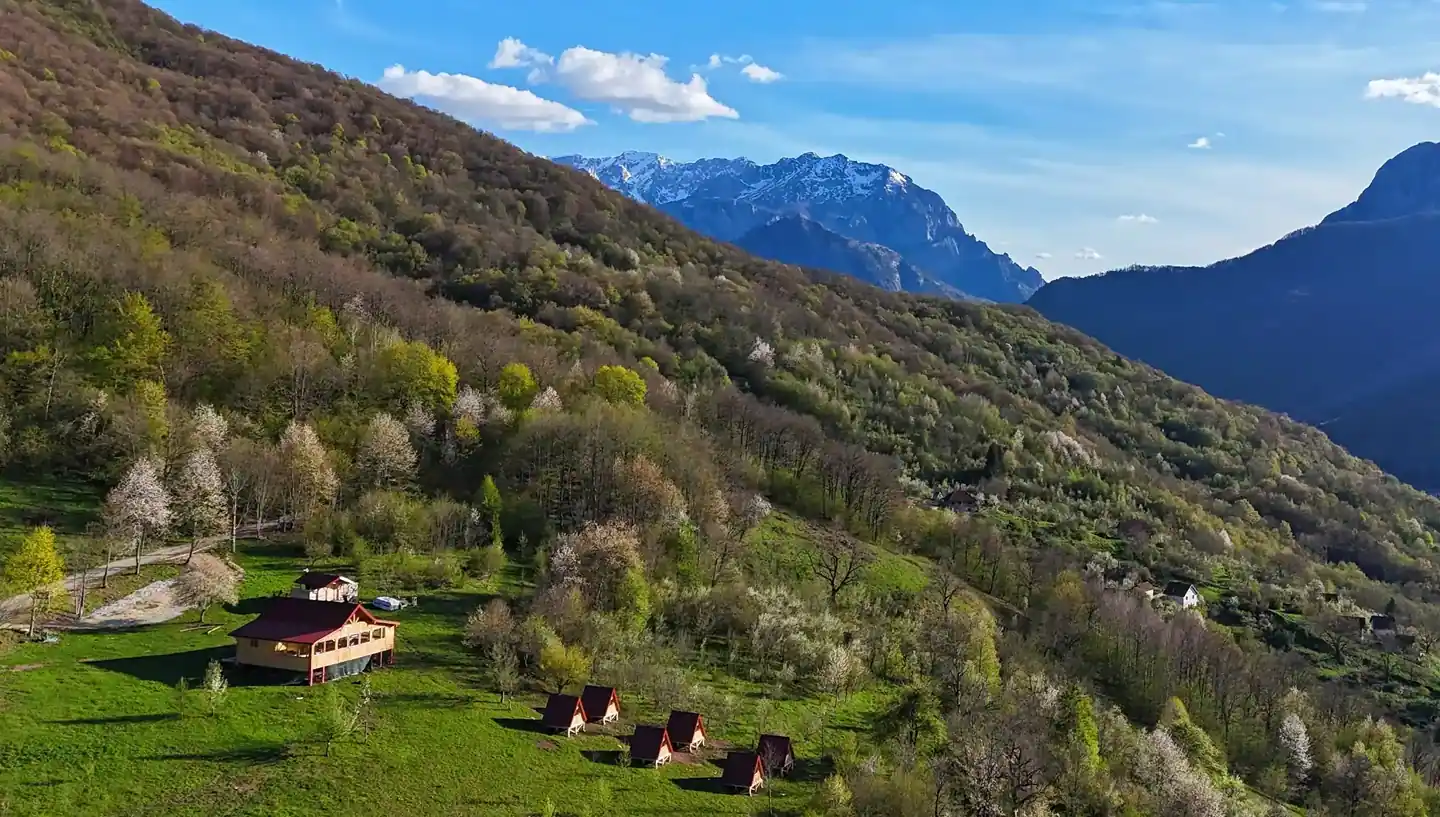
Our basecamp sits 3km off the main road through the park. It's the staging point for all our tours and a place to stay the night before or after.
Which Word Should You Use?
Whichever one your audience understands.
If you're in the US, "canyoneering" will land better with locals. If you're anywhere in Europe, "canyoning" is the standard. If you're booking a tour in Bosnia, or anywhere in the Balkans, France, Spain, Switzerland, or Austria, you'll see canyoning on every listing.
The activity is identical. The canyon doesn't care what you call it.
If you're ready to try it, Hrčavka Canyon is a good place to start. It's a one-day tour, no experience required, inside one of Europe's most untouched national parks.
Outdoor Tara Blog
Explore all blogs


Read time: 5 min
Canyoning Bosnia: Hrcavka Canyon, Hidden Waterfalls & History
Discover Hrcavka Canyon in Bosnia - a wild upper section where the river disappears underground, returns as a waterfall, and meets history, wildlife, and protected nature.
Read Article