How Difficult Is Canyoning? What Beginners Actually Need to Know
How Difficult Is Canyoning, Really?
TL;DR
- Canyoning is as difficult as your guide decides it is. Beginner tours pick easier routes through the canyon, so first-timers rarely face the hardest sections.
- The biggest challenge for most people isn't physical, it's mental: jumping into a pool or rappelling past a waterfall for the first time.
- Guided canyoning is statistically safe. Studies show roughly 4 injuries per 1000 hours, and most are mild.
- You don't need to be an athlete, but you do need a basic level of fitness and the ability to swim comfortably.
- Once you start a canyon, you finish it. There's no shortcut out halfway, which is part of what makes it feel like an adventure.
Have you looked at canyoning photos online and wondered if you'd actually survive it? The waterfalls, the jumps, the narrow gorges. It looks intense. Then you picture yourself there and start second-guessing whether you're fit enough, brave enough, or experienced enough.
Here's the honest answer: canyoning is far more approachable than it looks in photos. The difficulty depends almost entirely on the route your guide chooses, and beginner routes are built for people who have never done anything like this before.
Let's go through what actually makes canyoning hard, what doesn't, and how to know if you're ready.
What Actually Makes Canyoning Hard?
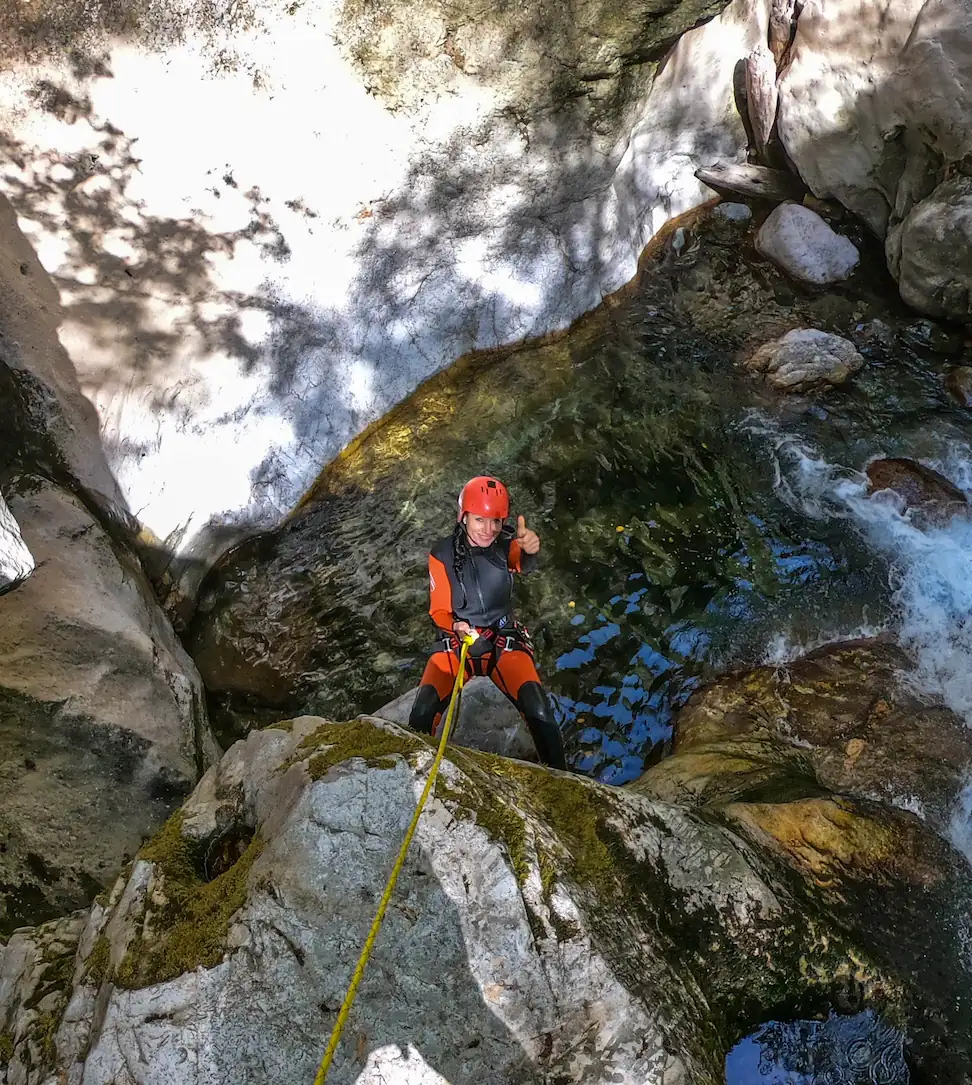
Canyoning can be as easy or as challenging as the route allows. As Beezra Activities explains, a good guide who knows the terrain can pick easier or harder paths through the same gorge to suit the group's ability.
This is the part most people don't realize before booking. You're not signing up for a fixed level of difficulty. You're signing up with a guide who reads the group, adjusts the route, and decides in real time which sections to take and which to skip.
A family with kids gets a different version of the canyon than a group of experienced adventurers. Same canyon, same guide, completely different experience.
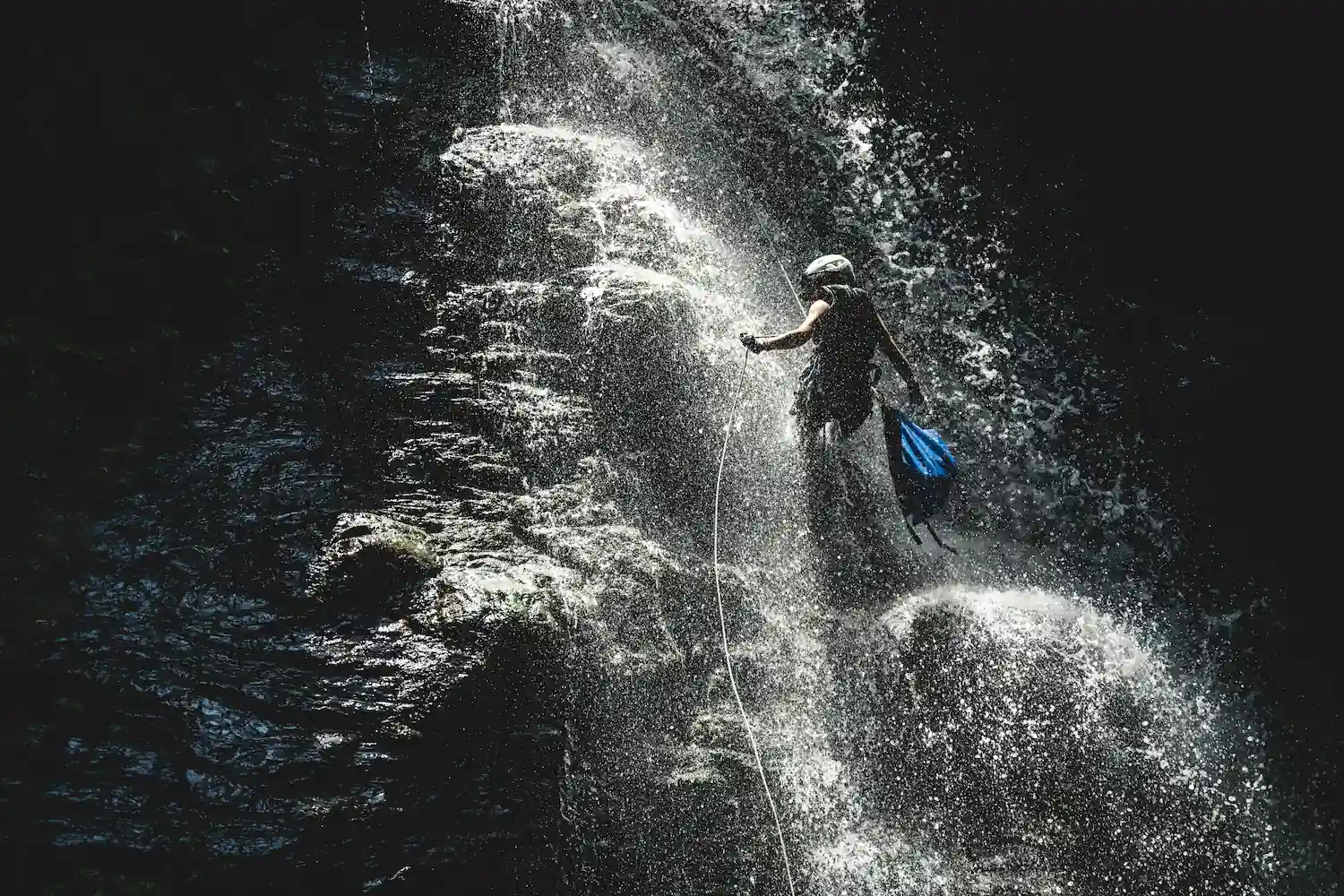
It depends on the element. Climbing and scrambling are physically demanding but manageable at a slow pace. Jumping is rarely physically hard, it's mentally hard. Rappelling looks technical but your guide manages the rope system for you.
Nae Limits breaks this down well: climbing sections require focus and a slow, careful pace, jumping is mentally challenging more than physically demanding, and rappelling, while technically the most complex part, becomes manageable once you've had your safety briefing and know to keep both hands on the rope above the carabiner.
In short: your body handles most of canyoning without much trouble. Your nerves are usually the bigger obstacle.
.webp)
Is Canyoning Dangerous?
Yes, but not at a competitive level. You need to be comfortable in water and able to swim a short distance without panicking, not swim laps.
ActivityBreaks notes that while swimming ability is required, most beginner routes don't demand strong swimming skills since they're mainly walking, wading, and sliding rather than long swims through deep water.
If you can swim a pool length without struggling, you're fine. The water sections in beginner canyons are short, and your guide is always nearby.
What If I'm Afraid of Heights or Jumping?
This is the single most common fear guests bring to canyoning, and it's completely normal.
In my experience, the fear of jumping is rarely about the jump itself. It's about not knowing what's below the surface or how high the jump actually is. That's exactly why a guide walks every participant through each jump individually: where to jump, how to position your body, what to expect on entry. Everything gets explained in detail before anyone jumps, with maximum care and attention to each person's comfort level. The equipment, the wetsuit, the helmet, the life jacket, all of it exists specifically to protect you through these moments.
George Yates, a qualified canyoning guide interviewed by Red Bull, confirms this is standard practice across the sport: most operators offer a rappel or abseil alternative to any jump, so nobody is forced to leap if they'd rather take the rope down instead.
The fear is real, but you're never left to handle it alone. And the people who push through that fear are usually the ones who come back wanting more.
What About Feeling Claustrophobic in a Canyon?
It's common, and it passes. Being surrounded by high canyon walls with no visible way out can feel closed in, especially in the first 20 minutes.
What I tell guests: that feeling is temporary, and it almost always fades once you're a few obstacles into the route and your focus shifts to the next jump or slide instead of the walls around you. There's no progress if you stay in your comfort zone the entire time. Canyoning is an adrenaline-driven adventure by nature, and a little discomfort early on is part of what makes finishing it feel worth it.
By the time most guests reach the final stretch, the canyon walls aren't the thing they remember. The jump they were scared of is.
Can I Stop Halfway If It Gets Too Much?
No. Once you start descending a canyon, you continue to the end. There's rarely an exit partway through.
Manawa's canyoning guide confirms that canyoning courses don't offer a way out mid-route, and groups need a roughly similar fitness level since splitting up isn't usually possible once the tour begins.
This isn't meant to scare you off. It's meant to set expectations. Tours are timed and routed with this in mind, so a well-chosen beginner canyon won't put you somewhere you can't reasonably finish.
No, not in any way that should stop you from trying it. Serious injuries are rare, and most incidents that do happen are minor.
A peer-reviewed injury surveillance study tracking canyoning participants found an overall injury rate of 4.2 per 1000 hours of canyoning, with nearly half of those injuries being mild and limited to soft tissue. A separate study of canyoning accidents in Austria spanning 13 years found an absolute mortality risk of just 0.02 deaths per 1000 hours of canyoning.
In my experience running tours at Outdoor Tara, a serious accident, meaning something beyond a minor scrape or bruise, happens maybe once every five years, and even then it's typically a minor injury rather than anything life-threatening. Guests come in expecting canyoning to be far riskier than it actually is. It's one of the more approachable adventure sports out there once you're with a guide who knows the canyon.
How Should I Physically Prepare Before a Tour?
Honestly, you don't need a training plan. Most guests show up with zero preparation, no special workouts, no swimming practice, nothing, and still finish the tour without trouble.
If you want to do something, SMExperiences suggests light cardio, core work, and some flexibility in the weeks before, noting it's more about stamina than raw strength. But this is a bonus, not a requirement. Beginner routes are built around the fact that most participants arrive with an average, everyday level of fitness and nothing more.
When you book a canyoning tour with us, we'll ask for your height, weight, and shoe size in advance so your gear fits properly on the day. That's the only real preparation that matters on our end.
If you want more on what to bring and how to get ready before you arrive, our useful information page covers the logistics in detail.
Is Canyoning Safe With the Right Equipment?
Yes. The equipment exists specifically to absorb the risks that come with wet rock, height, and water.
Nature's Ways notes that when practiced with a reputable, certified guiding company, canyoning is statistically quite safe, largely because guides are trained in swift water rescue, first aid, and weather assessment, and only enter a canyon when conditions are stable.
One detail worth knowing: ankle injuries from slipping on wet rock are among the most common canyoning injuries industry-wide. This is exactly why proper footwear matters so much. At Outdoor Tara, we're the only operator in the area providing professional canyoning boots designed specifically for grip on wet stone and ankle support, on top of the standard helmet, wetsuit, and harness included in every tour.
It's a small detail that makes a real difference once you're standing on slick rock above a pool.
Who Should NOT Go Canyoning?
Most people can. The main limiting factor isn't fear, age, or lack of experience, it's physical capability.
If you're seriously overweight to the point where movement, climbing, or swimming becomes genuinely difficult, canyoning probably isn't the right fit until that changes. Beyond that, if you're reasonably active and physically capable, age and inexperience aren't disqualifying. We've guided first-timers, nervous parents, and kids as young as 8 through Hrčavka Canyon without issue.
If you've done a beginner tour before and want something harder, routes like Nevidio Canyon or our advanced Hrčavka tour are built for that next step.
Ready to Try It?
Canyoning rewards people who show up a little nervous. That nervousness is normal, and it almost never matches the reality once you're in the canyon with a guide who's done this hundreds of times.
Hrčavka Canyon is where we send most first-timers, and for good reason. It's a one-day tour, no experience required, and one of the most accessible canyoning routes in Bosnia. Bring a towel, a change of clothes, and a willingness to get a little out of your comfort zone. We'll handle the rest.
Outdoor Tara Blog
Explore all blogs


Read time: 5 min
Canyoning Bosnia: Hrcavka Canyon, Hidden Waterfalls & History
Discover Hrcavka Canyon in Bosnia - a wild upper section where the river disappears underground, returns as a waterfall, and meets history, wildlife, and protected nature.
Read Article