Best Outdoor Activity Nearby: A Local's Guide to Sutjeska National Park from Sarajevo, Mostar & Dubrovnik
Where Is Sutjeska National Park, and How Far Is It From Sarajevo, Mostar, or Dubrovnik?
TL;DR
- Sutjeska National Park is about 2 hours from Sarajevo, 2 hours from Mostar, and 2.5 hours from Dubrovnik or Kotor.
- Canyoning looks like the most extreme activity here, but with a guide it's often the easiest one for total beginners.
- Hiking difficulty varies a lot. Pick your route based on your actual fitness, not how the photos look.
- Trekking poles genuinely protect your knees on the way down. Worth it if you're older or have knee problems.
- Booking is simple: WhatsApp or email to reserve, cash only on the day.
Type "best outdoor activity nearby" into Google from Sarajevo, Mostar, or Dubrovnik, and you'll get a wall of options. Hiking, canyoning, rafting, canoeing, multi-day combos, all within a couple of hours of where you're standing. Most guides won't tell you which one actually fits you. This one will.
We run tours in Sutjeska National Park every season, and the question we hear most isn't "what can I do here." It's "what should I do, given who I am and how fit I actually am." That's the question this guide answers.
What's the Best Outdoor Activity Nearby If You Have Zero Experience?
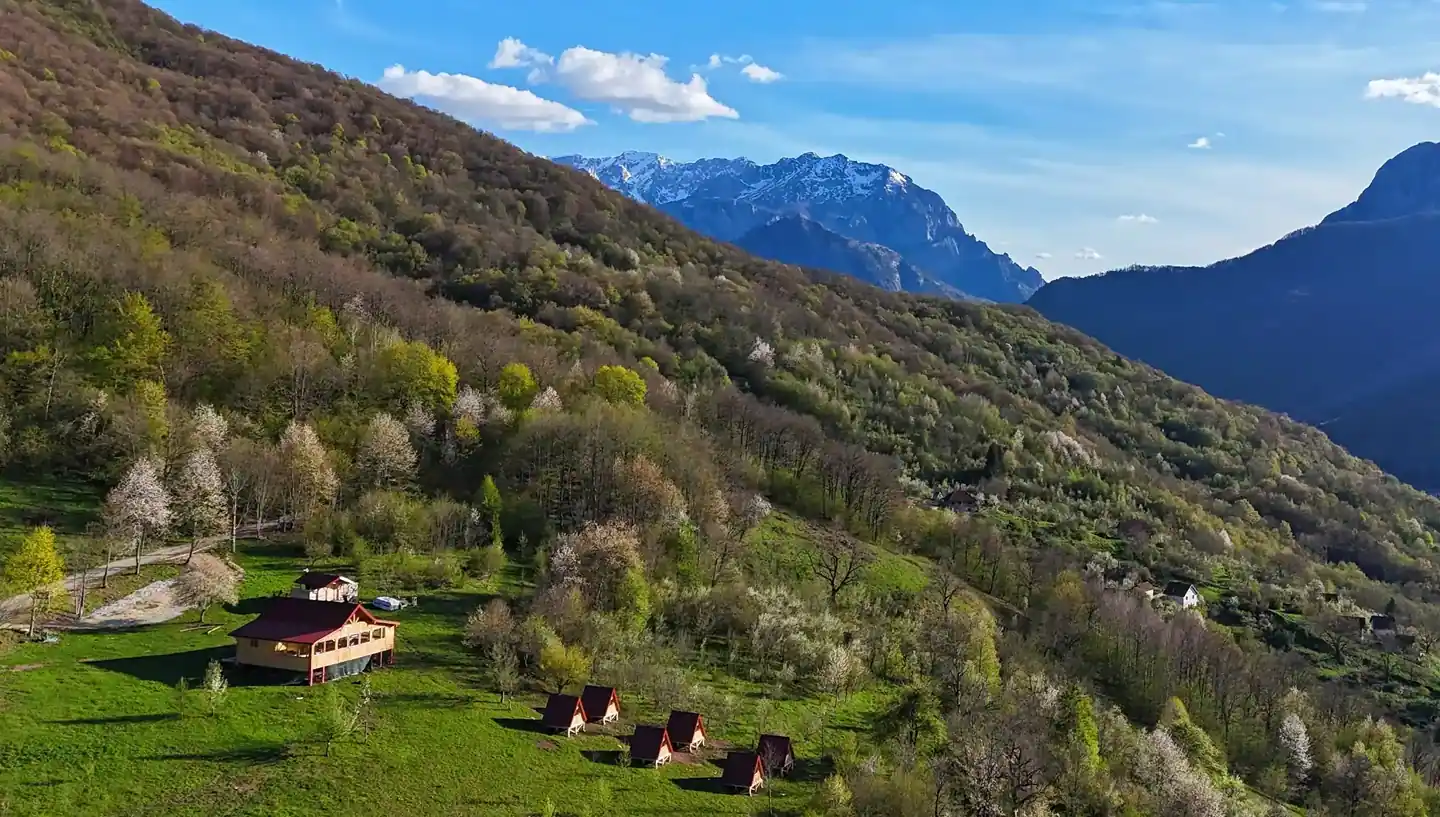
Sutjeska National Park sits in the southeast corner of Bosnia and Herzegovina, right on the border with Montenegro. It's roughly a 2 hour drive from Sarajevo, 2 hours from Mostar, and 2.5 hours from Dubrovnik or Kotor. That makes it a realistic day trip from any of the three, or a stop on the way between them.
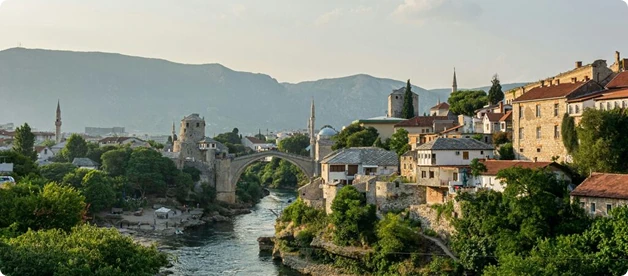
If you're coming from Mostar, you're likely already planning stops beyond the old bridge.
One local writer summed the park up well: it's a magnet for adrenaline seekers, with everything from rafting to hiking, canyoning, and mountain biking on offer. What that description misses is that "adrenaline" here doesn't mean "only for the fit and fearless." It means there's a version of each activity for almost everyone.
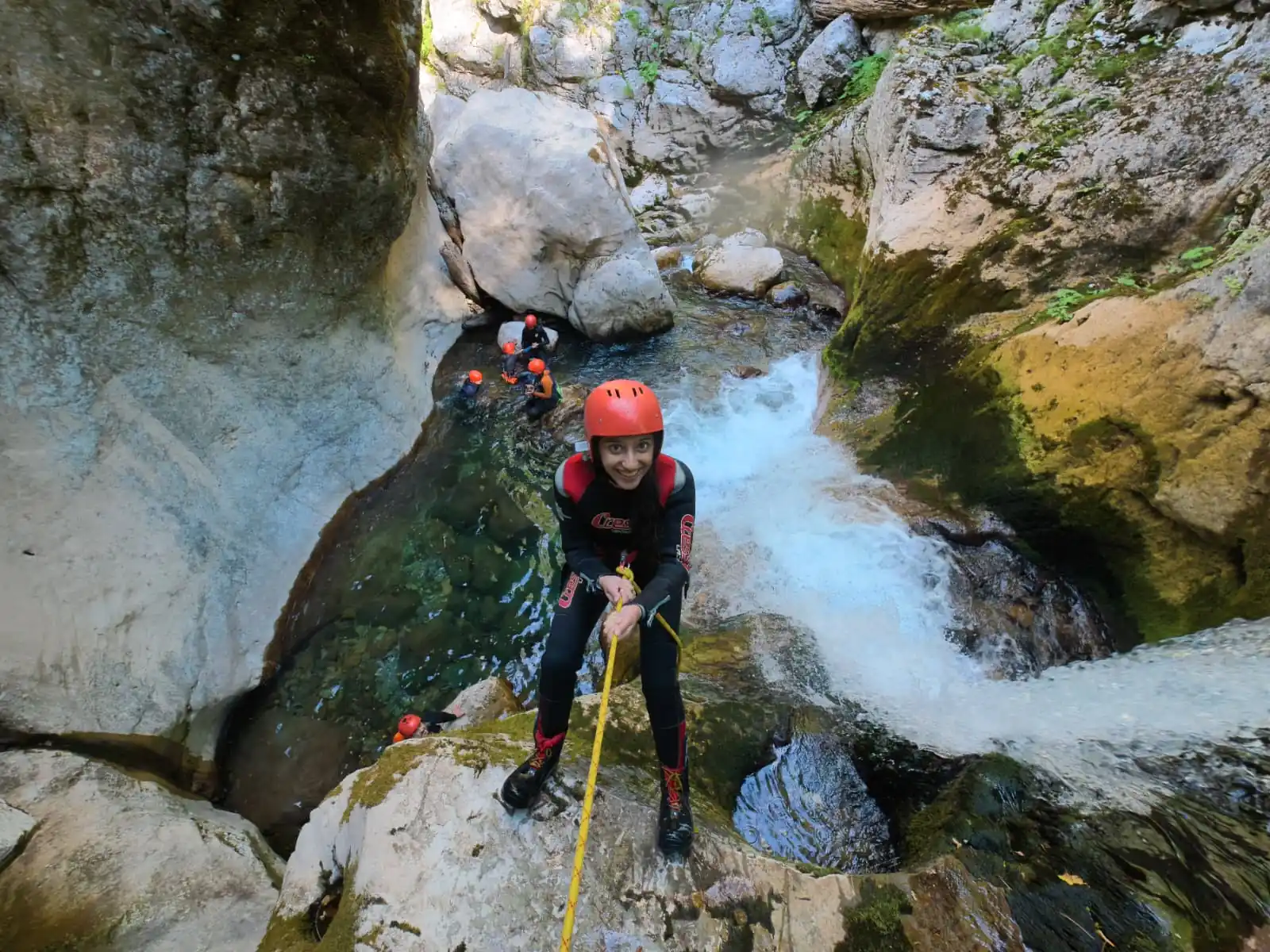
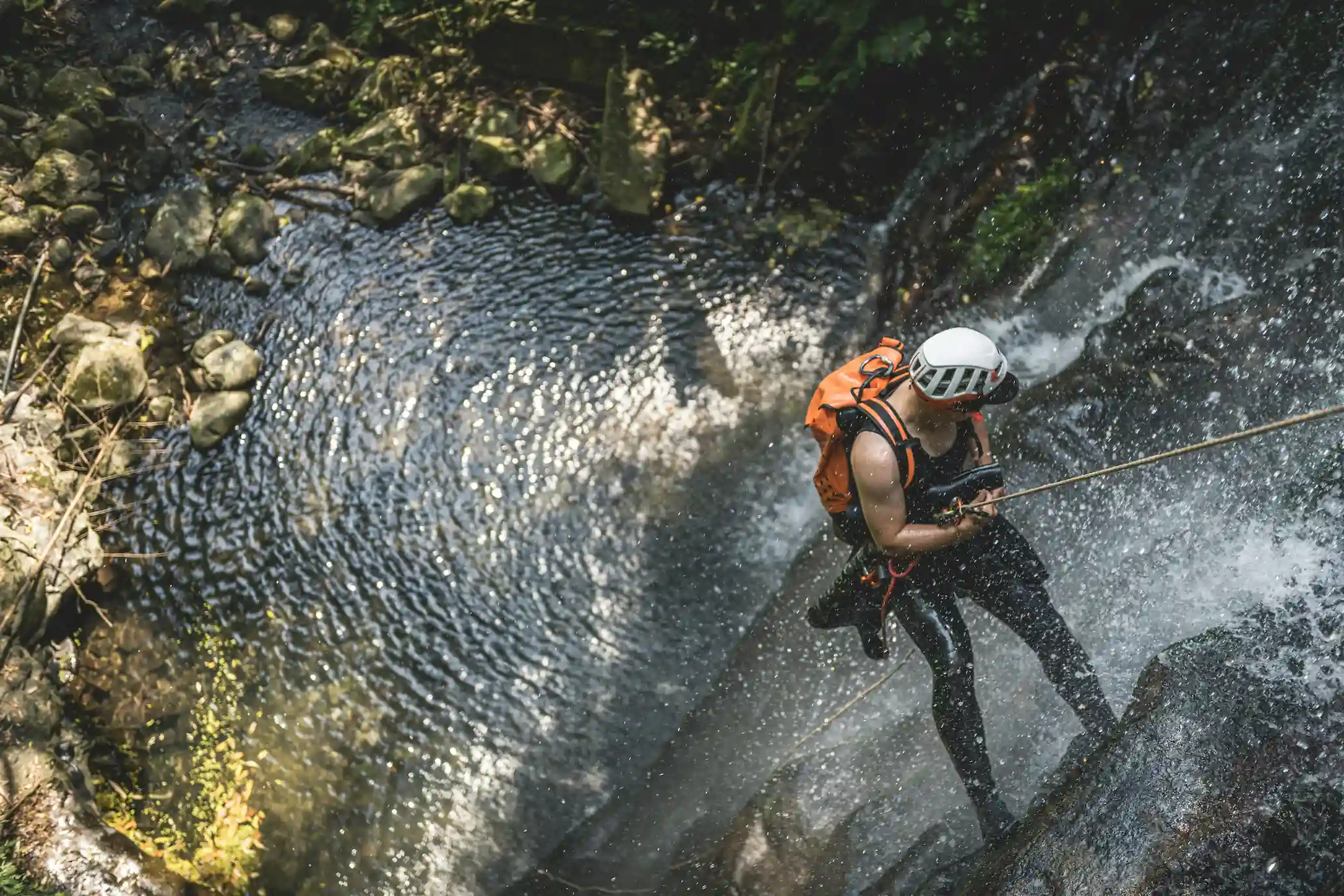
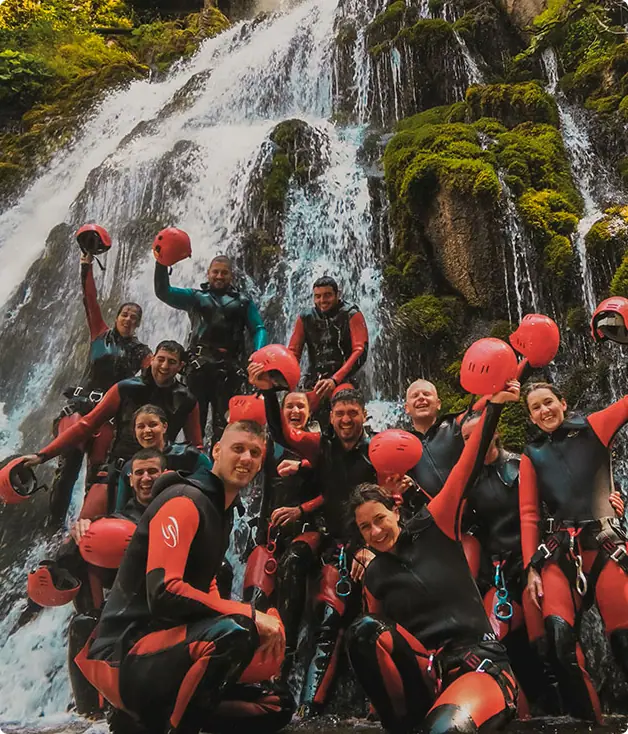
Guided canyoning is the best outdoor activity nearby for someone with no experience at all. That sounds backwards, since canyoning looks like the scariest option on the list, but the opposite is true. Your guide manages the ropes, checks every anchor, and walks you through each jump before you commit to it. You're never solving a problem alone.
Our Hrčavka Canyon tour is where we send almost all first-timers. It runs 3 to 5 hours, typically 10:00 to 15:00, and includes ICOpro certified guides, full gear (helmet, wetsuit, harness, and our own canyoning boots, which most operators don't provide), park permits, and a safety briefing before you touch the water. It's a fixed 90€ (176 BAM) per person, with discounts groups of 8 or more.
Food and drinks aren't included in the price, though you can buy both at camp afterward if you want to make a day of it.
Is Canyoning in Hrčavka Canyon Safe for Beginners and Kids?
Sutjeska has hiking routes across a wide range of difficulty, so the "best" hike depends entirely on who's doing it. Independent trail data on the park confirms a range of difficulties, from short easy loops to long, demanding routes toward the higher peaks.
If you want an easy introduction, our Perućica forest hike is a one-day walk through one of the last primeval forests left in Europe, with an English-speaking guide and no serious elevation demands. It's a fixed 60€ (117 BAM), with the national park entry fee and transport included, food not included.
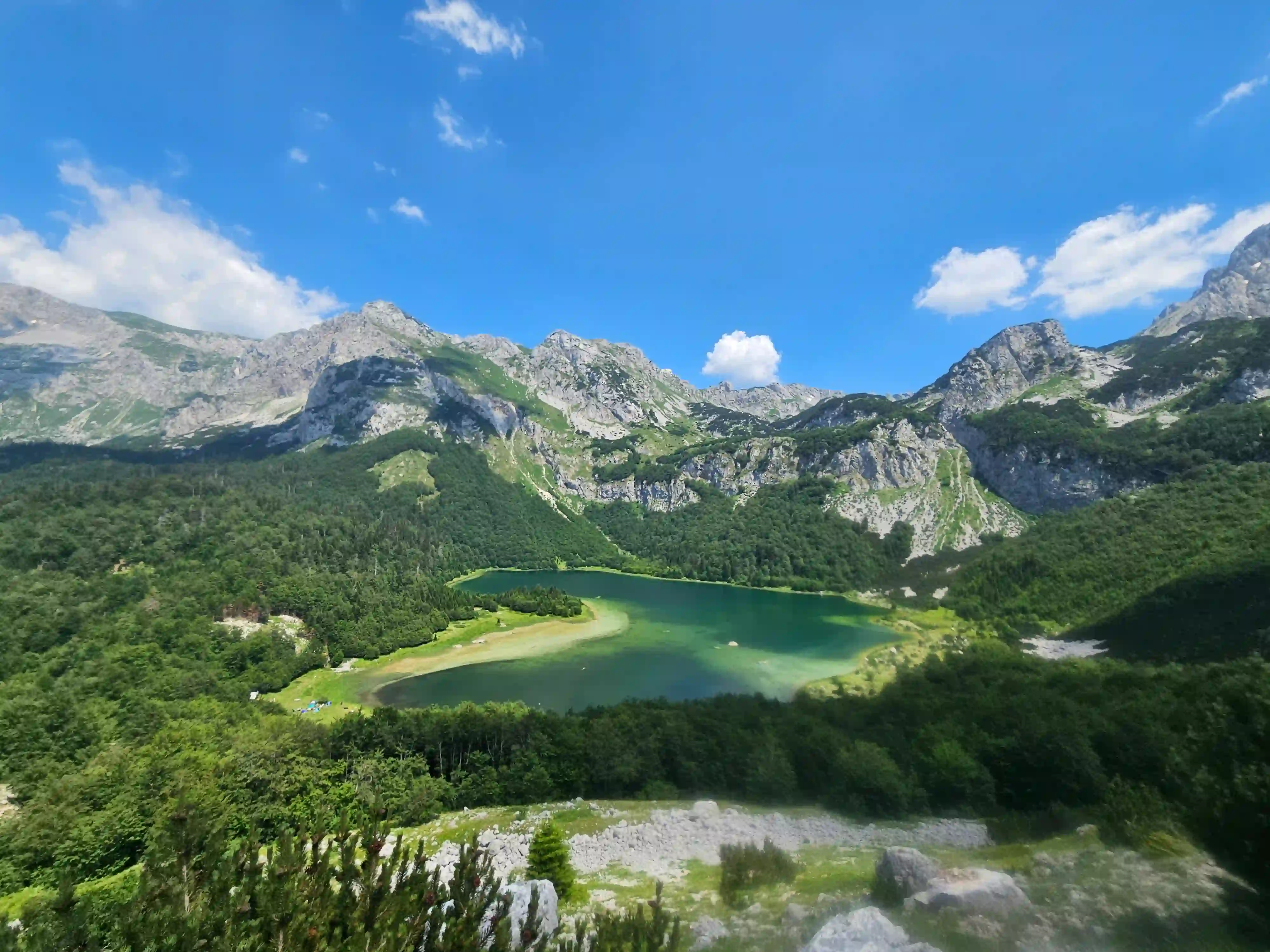
For something a bit longer, the hike to Trnovačko Lake is a half-day trip, around 4 to 5 hours, covering roughly 5km one way to the lake through a valley, a field, and a forest before you reach the lake itself. It's also 60€ (117 BAM), with group discounts available (8+ people).
In my experience, people consistently underestimate how much fitness matters for the longer routes and overestimate it for the shorter ones. We had a family with a young child on the Trnovačko Lake hike where the child got tired partway through. We shortened the route slightly and let the family spend more time at the viewpoint instead, and everyone left happy. That flexibility only works if you're upfront about your group's fitness level when booking, not halfway up the trail.
Why Do Trekking Poles Matter More Than People Think?
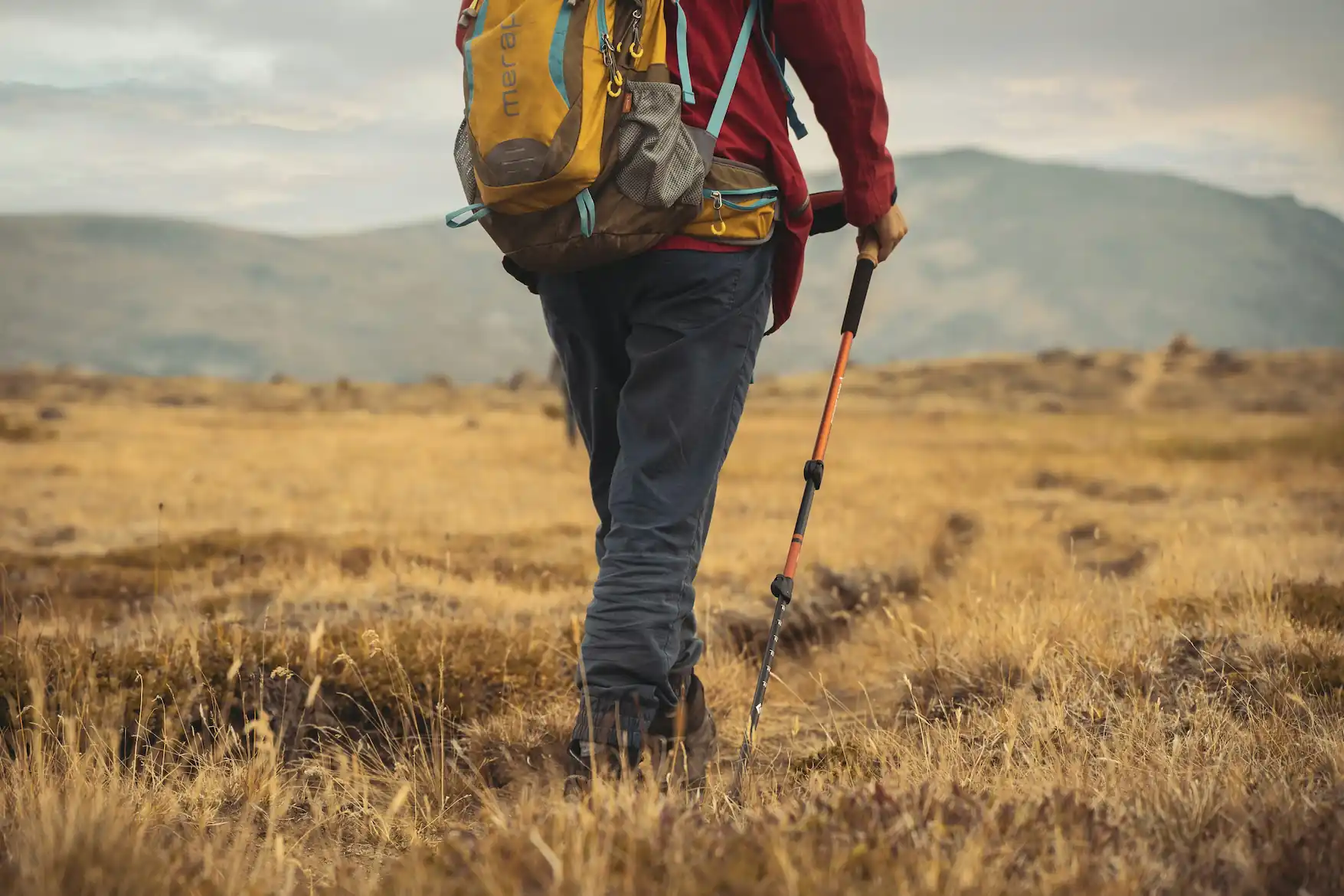
Trekking poles genuinely reduce the strain on your knees, especially on the way down, and they're worth using if you're older or already have knee problems. Walking downhill puts far more stress on your knees than walking on flat ground, with compressive forces on the joint running several times higher than on level terrain. Poles let your upper body absorb some of that load instead of your knees taking it all.
The American Hiking Society explains this clearly: on descents, poles let your upper body share the load that your knees and smaller leg muscles would otherwise handle alone. A peer-reviewed review of the research reached the same conclusion, noting that pole use can meaningfully reduce joint loading during downhill and level walking, particularly useful for anyone already dealing with knee pain.
If you're planning the Perućica hike toward the Skakavac waterfall, bring a pair. It's one of the simplest ways to make a longer walk noticeably easier on your joints, and we recommend it often to older guests or anyone with knee issues.
What Should You Actually Pack for a Day in the Park?
Pack more water than you think you'll need, and wear proper hiking shoes, not sandals or worn sneakers. These sound obvious, but they're the two mistakes we see most often.
A few practical notes:
- Water: bring more than you'd bring for a walk at home. There's no shop halfway up the trail.
- Footwear: closed hiking shoes with real grip. Sutjeska is real nature, not a paved park, and the terrain includes rocks, roots, and uneven ground.
- A change of clothes and a towel: useful after canyoning or rafting, since food and drinks at camp cost extra.
- Cash: payments here are cash only, in euros or convertible marks.
Yes. Canyoning is one of the more accessible outdoor activities in the park, including for kids 10 and up, as long as they can swim and aren't afraid of jumping into water. Height, weight, and shoe size matter more than age for figuring out if a specific child is ready, so we adjust individually rather than applying a flat age rule.
A prospective study on canyoning injuries found that most reported injuries were mild, and that canyoning guides were less prone to injury than unguided participants, with rappelling being the point in a descent where most incidents happen. That's exactly why a guide manages your rope and clips for you rather than handing you the equipment and a set of instructions. Separate safety data on canyoning confirms most operators accept kids 10 to 12 years old on beginner routes, with a guide present the whole time. A broader guide to the sport also notes that canyoning can build real confidence and coordination in kids when the route and conditions are chosen well.
For most beginner routes here, you don't need to be a strong swimmer. It depends on the exact tour booked, and your guide will talk you through what's expected before you get in the water.
In my experience, the nervousness beginners feel almost never matches what actually happens once they're in the canyon. The fear is real, but it's rarely about the activity itself.
The Jump That Changes How You See "Extreme"
One of our first canyoning groups included guests who were good swimmers but genuinely scared of heights. They got through most of the canyon fine. Then came the biggest jump.
We talked them through it, no pressure, no "just do it" pushing. For the smaller jumps earlier in the route, a bit of encouragement was enough. For the big one, our guide jumped in together with the guest to help them through the moment. They landed in the water laughing.
By the end of the day, that same group was sitting at camp with a beer and a soda, calling it one of the best days of their trip. That's the pattern we see over and over: the fear before the canyon is almost always bigger than anything that happens inside it.
How Do You Book a Tour With Outdoor Tara?
Booking takes three steps: message us on WhatsApp or email, confirm your tour and share your height, weight, and shoe size, then show up at the meeting point with what you need for the day.
WhatsApp tends to be faster than email if you're booking close to your travel dates. Once confirmed, we'll tell you exactly what to bring and where to meet. For most one-day tours, that's our basecamp in Tjentište.
Keep in mind payment is cash only on arrival, in euros or convertible marks, and that transport from Sarajevo, Mostar, or Dubrovnik for groups can carry a surcharge depending on distance.
The best outdoor activity nearby isn't the one with the most dramatic photos. It's the one that matches your group's fitness, comfort with water, and how much of a push you actually want out of your day. Canyoning trades looking extreme for being genuinely well-supported. Hiking rewards a bit of honesty about your own fitness level, and a pair of trekking poles if your knees need the help. Either way, you're about 2 hours from doing it.
Outdoor Tara Blog
Explore all blogs


Read time: 5 min
Canyoning Bosnia: Hrcavka Canyon, Hidden Waterfalls & History
Discover Hrcavka Canyon in Bosnia - a wild upper section where the river disappears underground, returns as a waterfall, and meets history, wildlife, and protected nature.
Read Article